Mentioned:Rolls-Royce$3B · Government Support
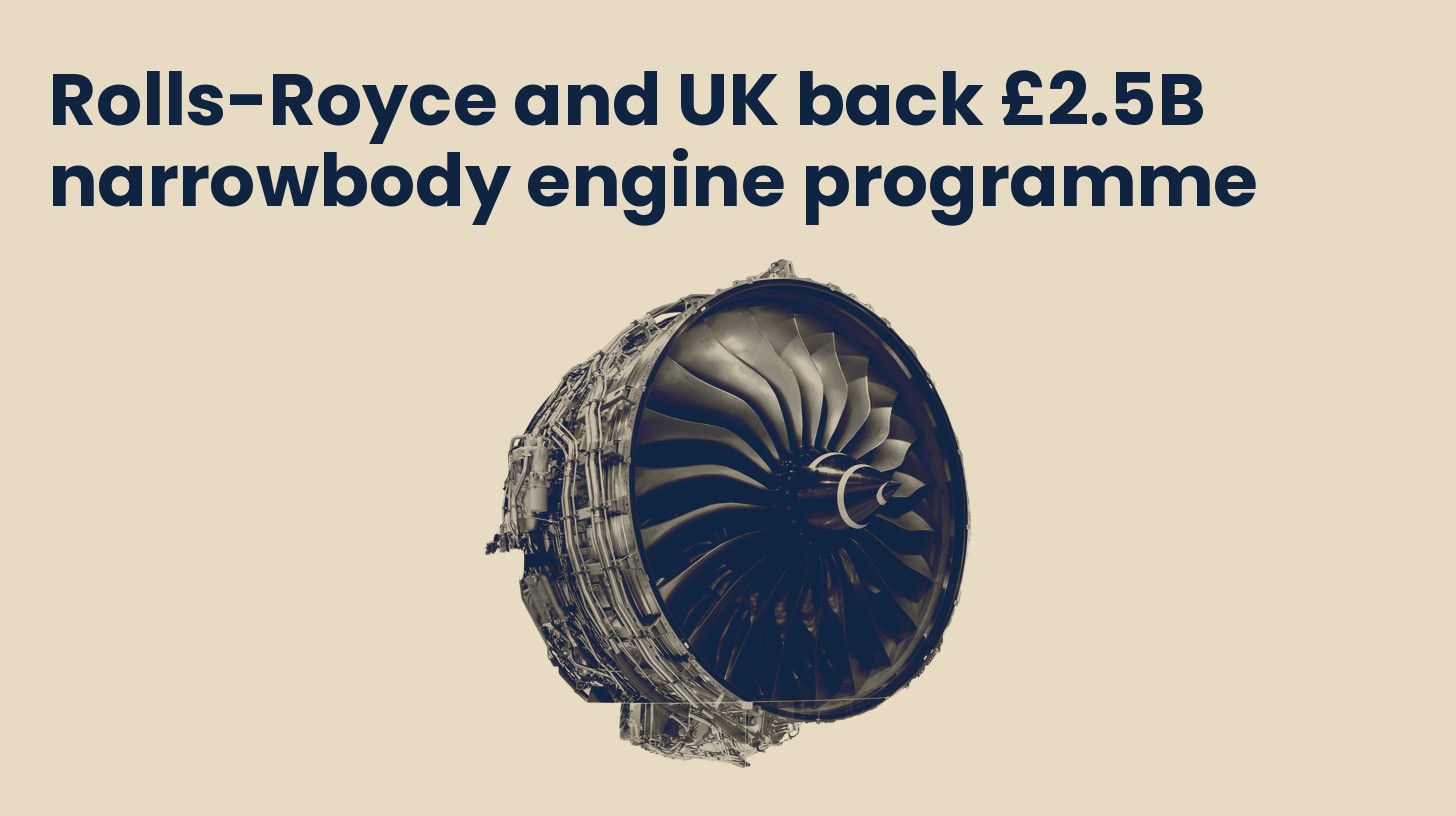
Rolls-Royce and the UK government announced a £2.5 billion, 10-year technology programme to advance next-generation narrowbody aircraft engines and support military engine capabilities. The initiative positions the UK for engine partnerships on commercial jets expected to launch around the turn of the decade.
What's happening
- Rolls-Royce and the UK government committed £2.5 billion over 10 years to develop next-generation narrowbody engines with lower emissions and higher efficiency.
- The programme includes an engine demonstrator project and aims to secure UK engine selection on new single-aisle aircraft launching mid-to-late 2030s.
- Initial investment would support 3,300 UK jobs at Rolls-Royce and supply chain partners by end of 2029, with potential for tens of thousands more if selected.
- If successful, Rolls-Royce would establish new engine assembly, testing and manufacturing facilities across the UK for components including high-pressure turbine blades and composite fan blades.
Why it matters
- Securing a narrowbody engine position could attract billions in follow-on investment and add £120 billion to the UK economy over the programme's lifetime.
- The programme sustains UK capability to design, develop and manufacture jet engines and supports military aircraft engine development and testing infrastructure.
- Narrowbody aircraft represent the largest growth opportunity in aerospace over the next 50 years according to the UK government's Industrial Strategy, making engine selection critical to UK supply chain competitiveness.
- Programme success drives expansion of UK advanced manufacturing capacity and supplier base across critical engine components and assembly operations.
Going deeper
- Aircraft manufacturers are selecting engine partners for new single-aisle jets over the next few years, with decisions preceding mid-2030s entry into service.
- Rolls-Royce aims to re-enter the narrowbody market through partnership with engine manufacturers, a segment it has not previously dominated.
- The programme includes university research activities alongside industry investment and manufacturing expansion.
- Rolls-Royce expects to invest significantly more than the government's £2.5 billion contribution, though specific company investment was not disclosed.
Financial impact
- UK government commitment of £2.5 billion funds 10-year technology development programme; Rolls-Royce will contribute additional unspecified capital (timing not disclosed).
- Revenue recognition depends on narrowbody engine selection and production ramp following mid-2030s entry into service; near-term backlog limited to development work.
- Capital expenditure will fund new UK manufacturing facilities for engine assembly, testing and component production; timing aligns with pre-launch phase through 2030s.
- Successful programme execution creates potential for multi-billion pound follow-on commercial contracts and defence engine programmes starting late 2030s.
The intrigue
- Rolls-Royce's narrowbody selection by major manufacturers remains uncertain; competing engine makers including CFM International and others hold established positions.
- The extent of Rolls-Royce's own investment relative to the £2.5 billion government commitment has not been quantified, raising questions about programme risk sharing.
The fine print
- The programme remains subject to final government and company agreement; announcement described as a plan rather than a binding commitment.
- Aircraft manufacturer engine selection decisions are expected over coming years with no guaranteed outcome for Rolls-Royce.
- Suppliers would need to build new factories to support the programme if Rolls-Royce is selected, creating dependency on third-party capital deployment.
Source: defence-industry.eu · Oct 28, 2026 · Drafted with Claude, reviewed by Industrial Base Alpha.