Mentioned:No public companies identified
The U.S. Army released a 46-page operational doctrine guide emphasizing multidomain operations over counterinsurgency, triggering major implications for the defense industrial base including surge production requirements and organic manufacturing at forward locations.
What's happening
- The Army's new doctrine pivots from small-unit counterinsurgency to big-unit maneuver warfare organized around four elements: Convergence, Strike, Close Battle and Endurance.
- The guidance requires expansion and modernization of the Army's 23 government depots, arsenals and ammunition plants beyond historical single-product models.
- The doctrine mandates forward-deployed munitions and fuel storage, autonomous logistics platforms, and organic additive manufacturing at forward locations to reduce dependence on distant factories.
Why it matters
- The industrial base faces new surge production requirements with contractors needing rapid replenishment solutions rather than peacetime schedules.
- Government organic production must scale to support distributed forward operations in contested environments with limited supply routes.
- The doctrine signals a sustained shift in equipment and capability priorities away from two decades of counterinsurgency-optimized platforms toward big-formation maneuver warfare systems.
Going deeper
- The doctrine acknowledges lessons from Ukraine, where drones and long-range munitions dominate such that maneuver became rare, and stalemate resulted.
- Forward-deployed logistics platforms must function in denied environments where air bases and ships cannot reliably resupply from rear areas thousands of miles away.
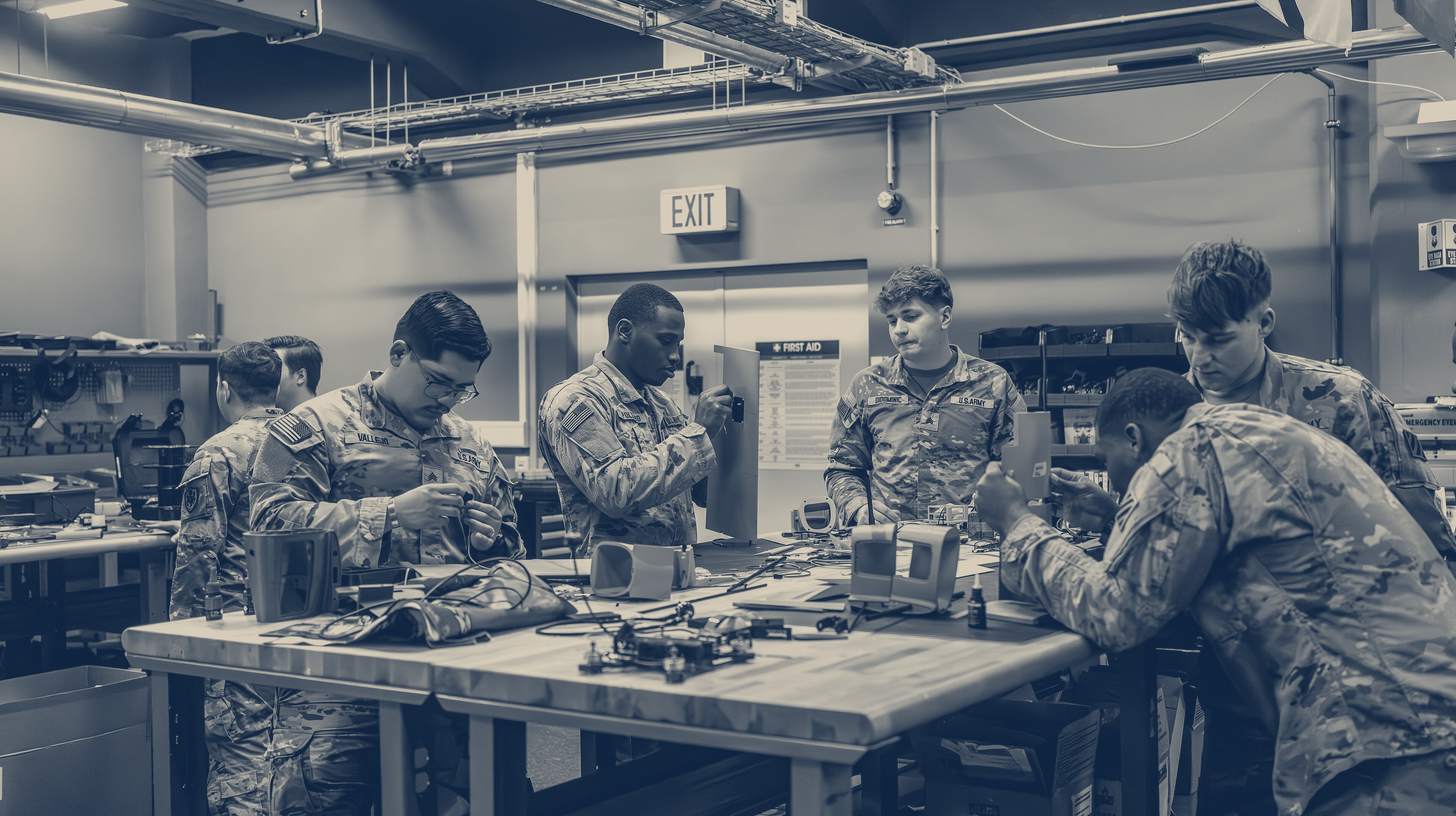
- Troops will need organic 'right-to-repair' authorities and additive manufacturing to fix and produce equipment locally rather than depend on transport from central depots.
The fine print
- The doctrine is operational guidance, not a funded program with obligated dollars or procurement timelines disclosed.
- Implementation depends on separate budget actions, acquisition programs and industrial capacity investments by Congress and DoD.
Source: Defense News · Oct 14, 2026 · Drafted with Claude, reviewed by Industrial Base Alpha.