Mentioned:No public companies identified
The U.S. Army established the 390A military occupational specialty for robotics technicians and graduated its first cohort of 10 warrant officers in October 2026. The program trains soldiers to adapt autonomous systems to specific missions in disconnected environments rather than serve as drone pilots.
What's happening
- Ten warrant officers became the Army's first graduates under the new 390A military occupational specialty on October 2, 2026.
- The 19-week training course teaches soldiers to adapt robotic systems to missions, enemies, and terrain through software development, intelligence analysis, command and control, and communications under disconnected conditions.
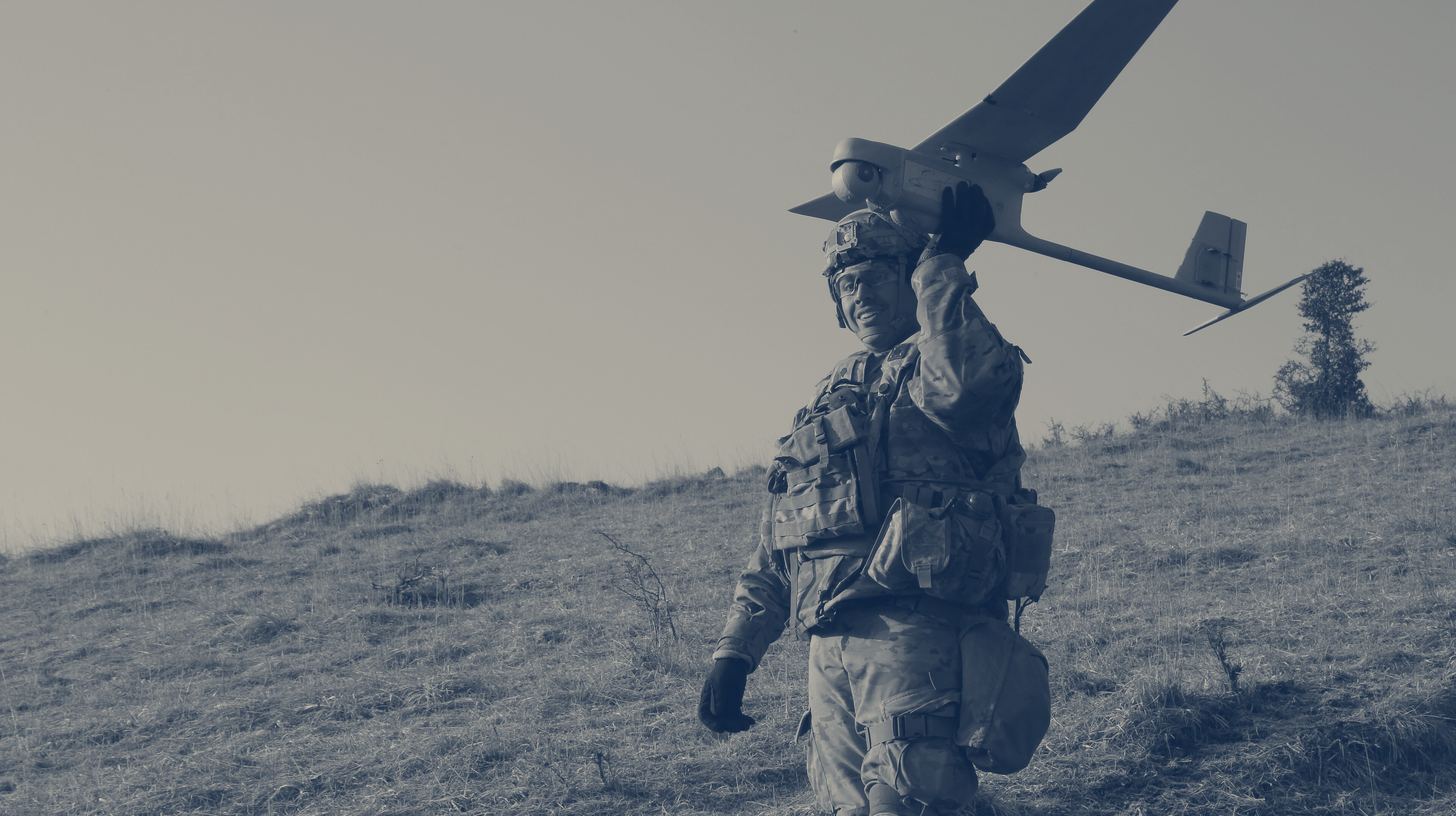
- During the first phase, students improved drone hardware and software to enable mesh network communications while under electromagnetic jamming, equipping a quadcopter with a $1,000 high-definition camera.
- The curriculum was expanded mid-program because students outpaced the initial course design within 4 weeks, prompting instructors to add difficulty with academic and international partner support.
Why it matters
- Militaries focused solely on drone pilots lose advantage to adversaries who adapt technology to mission demands, a lesson reinforced by Azerbaijan's victory in Nagorno-Karabakh and ongoing Middle East conflicts.
- Robotics technicians capable of rapid field innovation address a critical gap in autonomous systems doctrine and capability deployment for disconnected environments without internet connectivity.
- Acting Army Secretary Adam Telle indicated plans to expand the 390A specialty beyond Special Forces throughout the broader Army, potentially scaling the capability across the service.
- The program embeds acquisition, research and development, and data science skills into frontline soldiers, reducing reliance on contractor support for battlefield adaptation.
Going deeper
- The program drew lessons from Ukraine's rapid innovation with commercial drones and Azerbaijan's use of decoy aircraft to confuse enemy defenses.
- The U.S. employed a similar adaptation tactic in Operation Epic Fury earlier in 2026, swarming Iranian forces with cheap drones modeled after Iranian Shahed designs.
- The curriculum emphasizes controlled failure and reconsideration to build problem-solving capability, with instructors redesigning challenges when students demonstrated superior performance.
The intrigue
- The Army's commitment to expand the specialty throughout the service signals a fundamental shift in autonomy doctrine from centralized pilot operations to distributed field innovation, yet implementation details remain undisclosed.
Source: defenseone.com · Oct 16, 2026 · Drafted with Claude, reviewed by Industrial Base Alpha.