Mentioned:Anduril IndustriesGeneral Atomics Aeronautical Systems
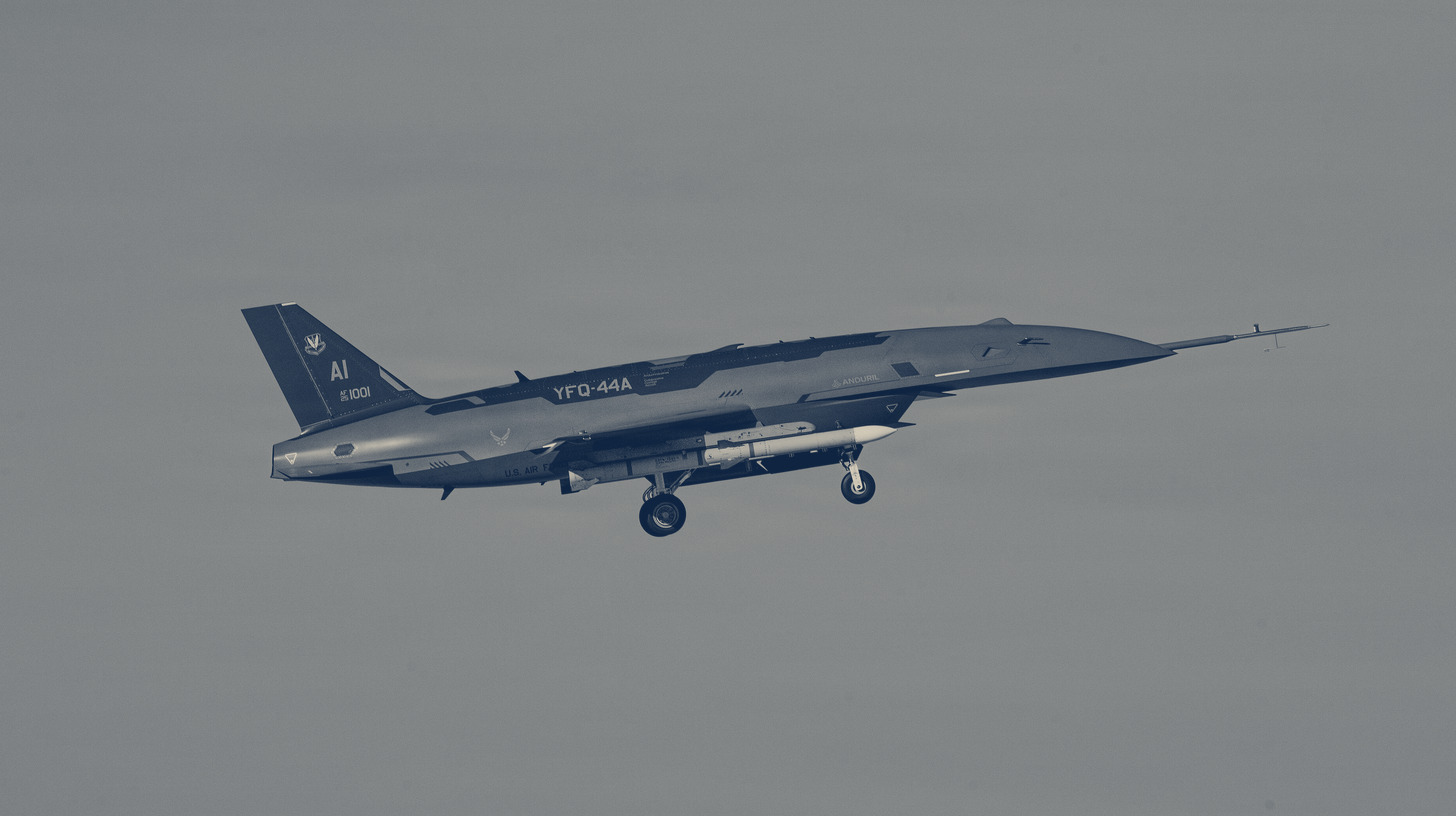
An F-22 Raptor pilot took control of a YFQ-44A Fury Collaborative Combat Aircraft during an airborne tactical demonstration in early October 2026, marking the first successful manned-unmanned teaming control flight. The Air Force confirmed production goals of 500 CCAs by 2032 and 1,000 by decade's end.
What's happening
- F-22 pilot served as airborne quarterback, issuing high-level tactical directives to YFQ-44A, which executed autonomy software commands for dynamic flight maneuvers and simulated combat tasks.
- Air Force confirmed 500 Collaborative Combat Aircraft planned by 2032, with 1,000 total by end of decade under CCA Increment 1 program.
- F-22 Raptor designated as threshold platform for initial CCA integration, with future consideration for F-16, F-35A, F-15E and F-15EX pairings.
- YFQ-44A design dropped prototype 'Y' designation following summer production contract award, indicating transition to full-scale manufacturing readiness.
Why it matters
- Successful airborne control demonstration validates core operational concept for CCA Increment 1, reducing program risk before scaling to 500-aircraft production run.
- Manned-unmanned teaming capability extends F-22 operational reach and decision-making speed by allowing single pilot to direct multiple autonomous combat assets simultaneously.
- Production goal of 500 aircraft by 2032 establishes procurement schedule for defense industrial base, signaling sustained demand for autonomous airframe manufacturing and autonomy software integration.
- Portable Command and Control Enclave system enables austere-environment operations, expanding deployment flexibility for crewed-uncrewed formations across global theaters.
Going deeper
- F-22 previously validated manned-unmanned teaming with MQ-20 Avenger surrogate platform over five-plus years, de-risking autonomy concepts before purpose-built CCA platforms arrived.
- Autonomy work progressed through hardware-in-the-loop and software-in-the-loop testing before airborne demonstration, following disciplined acquisition pathway.
- Production contracts announced months ahead of schedule because FQ-42 and FQ-44 designs met rigorous mission requirements, accelerating transition from engineering to manufacturing development.
- Air Force goal changed from 150 combat-capable CCAs by end of 2026 to 500 by 2032, reflecting confidence in platform maturity and operational need.
The intrigue
- F-22 selected as exclusive threshold platform for initial CCA integration despite broader integration testing with F-35A, F-16, F-15E and F-15EX, raising questions about interoperability roadmap and operational doctrine for mixed-fleet command.
Source: theaviationist.com · Oct 16, 2026 · Drafted with Claude, reviewed by Industrial Base Alpha.