Mentioned:Alta AresIcarus SwarmsNaval Group
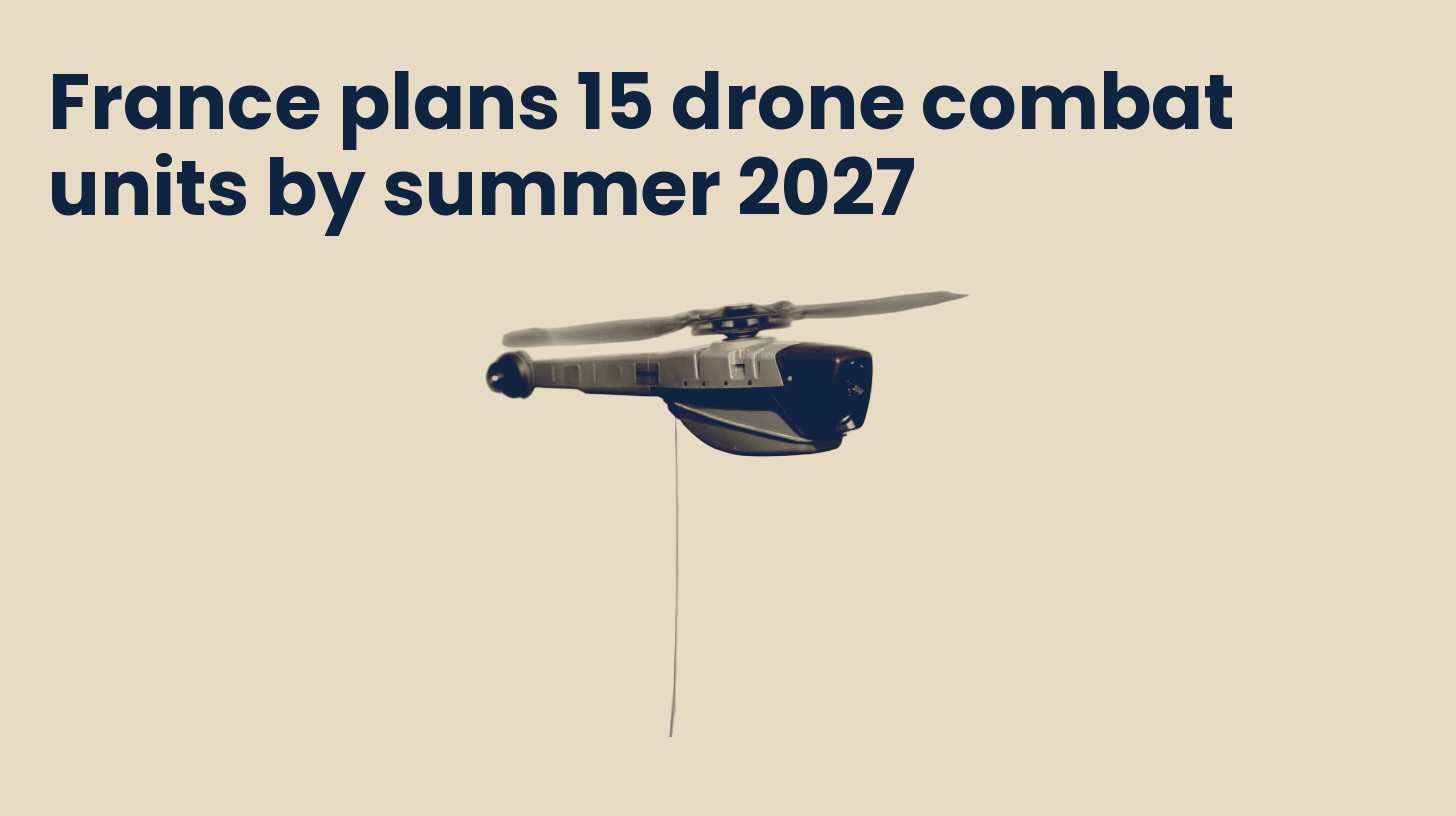
The French Army plans to field approximately 15 drone-combat units by summer 2027, scaling an experimental squadron that demonstrated its effectiveness against NATO-standard combined-arms tactics during multinational exercises. The expansion reflects lessons learned from Ukraine and partnerships with French firms on autonomous navigation and AI detection.
What's happening
- The 1st Hunter-Drone Squadron, established as a full operational unit in April 2026, will serve as the template for 15 drone-combat units by summer 2027 and additional units by end-2027.
- During Exercise Hedgehog in May 2025, 10 French drone pilots comprising 5 percent of a tactical group inflicted 20 percent of total casualties against U.S. forces equipped with M2A4 Bradley Fighting Vehicles.
- France deployed a drone-combat unit to Romania as part of Mission Aigle and will deploy a second unit to Poland for an exercise, demonstrating operational integration into NATO missions.
- The 1er RIMa partners with Alta Ares on AI detection, Icarus Swarms on autonomous navigation and computer-assisted piloting, and Naval Group on launch canisters for drone deployment.
Why it matters
- The drone-combat unit proved that a small team of FPV operators can disrupt conventional maneuver warfare by targeting command posts several kilometers from the front line and disrupting enemy decision-making.
- Scaling 15 units signals French Army investment in distributed autonomous systems as a core combat capability rather than a supporting element, reshaping combined-arms doctrine.
- NATO allies observing French drone effectiveness in exercises and deployments may accelerate their own autonomous systems procurement and doctrine changes.
- The model converts existing light cavalry squadrons into drone-combat formations without requiring entirely new force structure, enabling rapid expansion at lower organizational cost.
Going deeper
- The 1er RIMa's concept built on proposals from open-source intelligence specialists who studied Ukrainian drone tactics and applied light cavalry principles: rapid maneuver, intelligence gathering, and strike.
- During Exercise Orion 2026, the drone squadron destroyed four regimental command posts, multiple logistics convoys and air-defense units by combining surveillance drones, FPV attack drones and loitering munitions.
- Pilots, including some converted from armored vehicle gunner roles, operate in dispersed formations with emphasis on stealth and mobility, mirroring traditional cavalry doctrine with drones as primary weapons.
Financial impact
- No budget figure disclosed; program classified as French Army expansion within existing defense modernization spending.
- Partnerships with Alta Ares, Icarus Swarms and Naval Group represent procurement for AI detection, autonomous navigation software and launch canister production across 15 planned units, timing not disclosed.
The intrigue
- The rapid transition from experimental squadron to full operational status in one year and immediate deployment to Romania and Poland suggests high confidence in the model, but scaling from one proven unit to 15 within 18 months presents training, logistics and maintenance risks.
- French reliance on three private firms for core capabilities in AI detection, autonomous swarming and launch systems creates supply chain concentration if scaling accelerates beyond their current production capacity.
The fine print
- The 15-unit target for summer 2027 is an Army goal stated by the Chief of Staff to lawmakers; no formal program authority or appropriation amount has been disclosed.
- Deployments to Romania and Poland are characterized as initial steps; operational doctrine and rules of engagement for drone-combat units in NATO forward positions remain under development.
Source: Defense News · Oct 30, 2026 · Drafted with Claude, reviewed by Industrial Base Alpha.