Lockheed Martin is investing $300 million to expand its Grand Prairie, Texas facility that produces missile interceptors and components for four major DoD programs. The expansion adds 100,000 square feet of manufacturing space and nearly 100 high-precision machines to support multi-billion-dollar production frameworks.
What's happening
- Lockheed is investing $300 million to expand the Grand Prairie facility to 735,000 square feet, adding 100,000 new square feet and converting 85,000 square feet of office space to factory floor.
- The plant will install nearly 100 new high-precision machines by end of 2026, building on 30 machines added in recent months, and integrate 24 automated machines from Hadrian by early 2027.
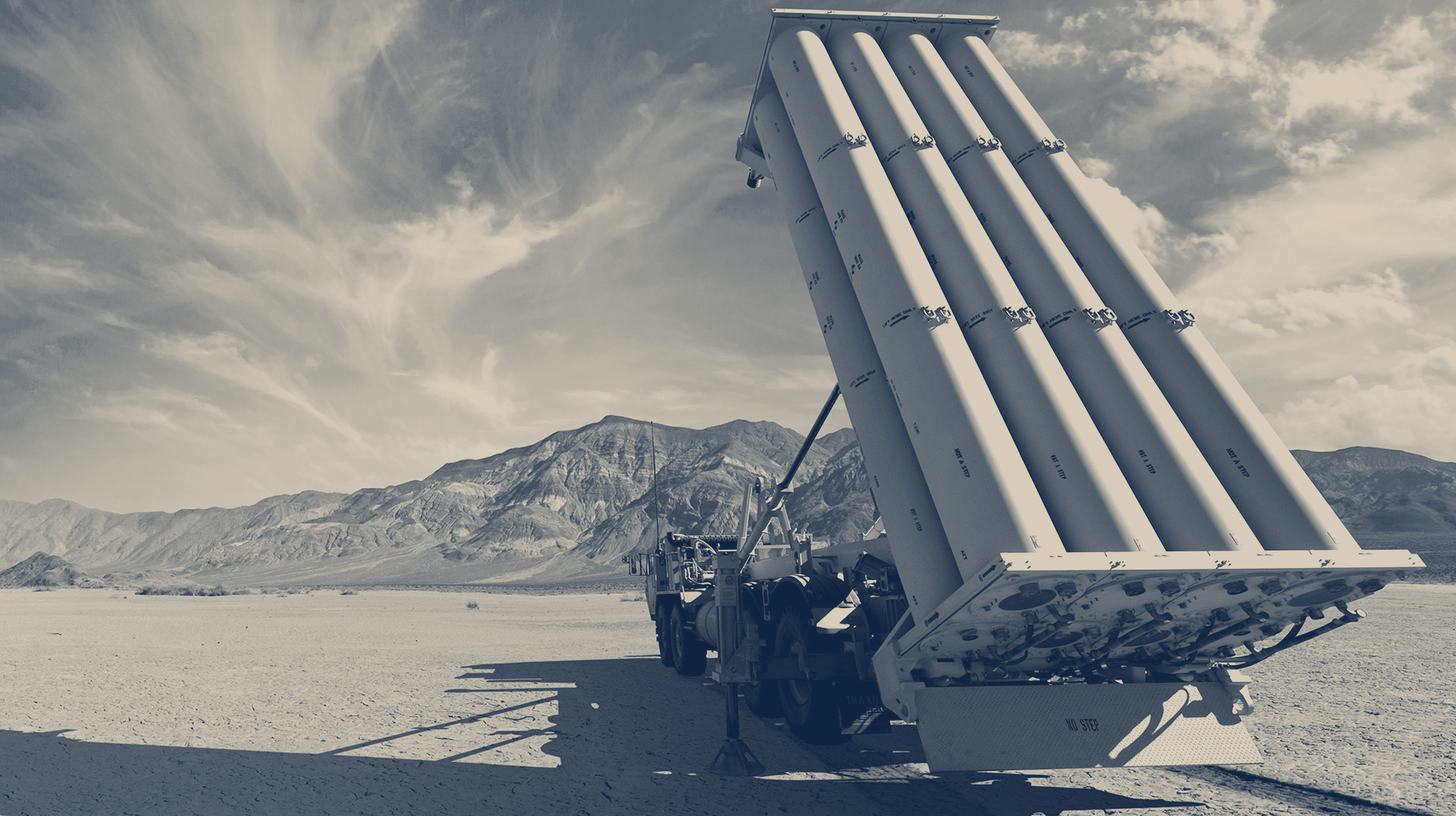
- The facility supports PAC-3 MSE, THAAD, Precision Strike Missile and AIM-260 production, currently employing about 800 production workers and producing 250,000 parts annually as of 2025.
Why it matters
- PAC-3 MSE production is targeted to increase from 600 to roughly 2,000 interceptors per year over seven years under a framework agreement, with a $58.6 billion, seven-year Army contract awarded in July 2026.
- THAAD interceptor production is set to quadruple under a Missile Defense Agency contract worth more than $35 billion awarded in June 2026.
- The expansion directly supports the Pentagon's industrial base strategy to increase missile production at scale, with Lockheed planning to spend $8 billion to $9 billion through 2030 across more than 20 U.S. facilities.
- Lockheed expects to create 2,000 jobs in Texas and 6,000 jobs nationwide as part of the broader munitions production ramp.
Going deeper
- The partnership with Hadrian, a California manufacturing startup, reflects the Pentagon's push for speed and automation in missile production through public-private collaboration.
- The Grand Prairie facility serves as a component supplier to final-assembly sites in Camden, Arkansas and Troy, Alabama, making it a critical link in the integrated supply chain.
- The expansion follows framework agreements signed by the Pentagon with Lockheed in January 2026 for PAC-3 MSE, January for THAAD, March for Precision Strike Missile, and September for AIM-260.
Financial impact
- Lockheed will recognize the $300 million capex investment in property, plant and equipment on the balance sheet in 2026, with depreciation flowing through the income statement over the asset life.
- Revenue recognition on the $58.6 billion Army PAC-3 MSE contract and $35 billion Missile Defense Agency THAAD contract will occur over the respective performance periods as interceptors are delivered, supporting gross margin on munitions products.
- The expansion is part of Lockheed's $8 billion to $9 billion munitions and facility modernization plan through 2030, affecting capital expenditure guidance in annual cash flow statements.
The intrigue
- Lockheed's reliance on Hadrian's automation technology and third-party manufacturing capacity raises questions about whether the company's internal machine procurement and staffing plans can keep pace with Pentagon production targets.
- The aggressive seven-year production ramp to 2,000 PAC-3 MSE interceptors annually and quadrupled THAAD output assumes sustained geopolitical tension and Congressional appropriations through 2033, creating execution risk if demand or funding shifts.
The fine print
- The $58.6 billion Army contract for PAC-3 MSE is a seven-year production contract, not a single-year award, so revenue will be recognized incrementally as deliveries occur.
- The $35 billion Missile Defense Agency THAAD contract obligation and timeline are disclosed, but the exact annual production ramp and associated cost of goods sold impacts are not detailed.
- Hadrian's 24 automated machines are expected to be operational by early 2027, creating potential near-term production bottlenecks if integration delays occur.
Source: Defense News · Oct 16, 2026 · Drafted with Claude, reviewed by Industrial Base Alpha.