Mentioned:No public companies identified
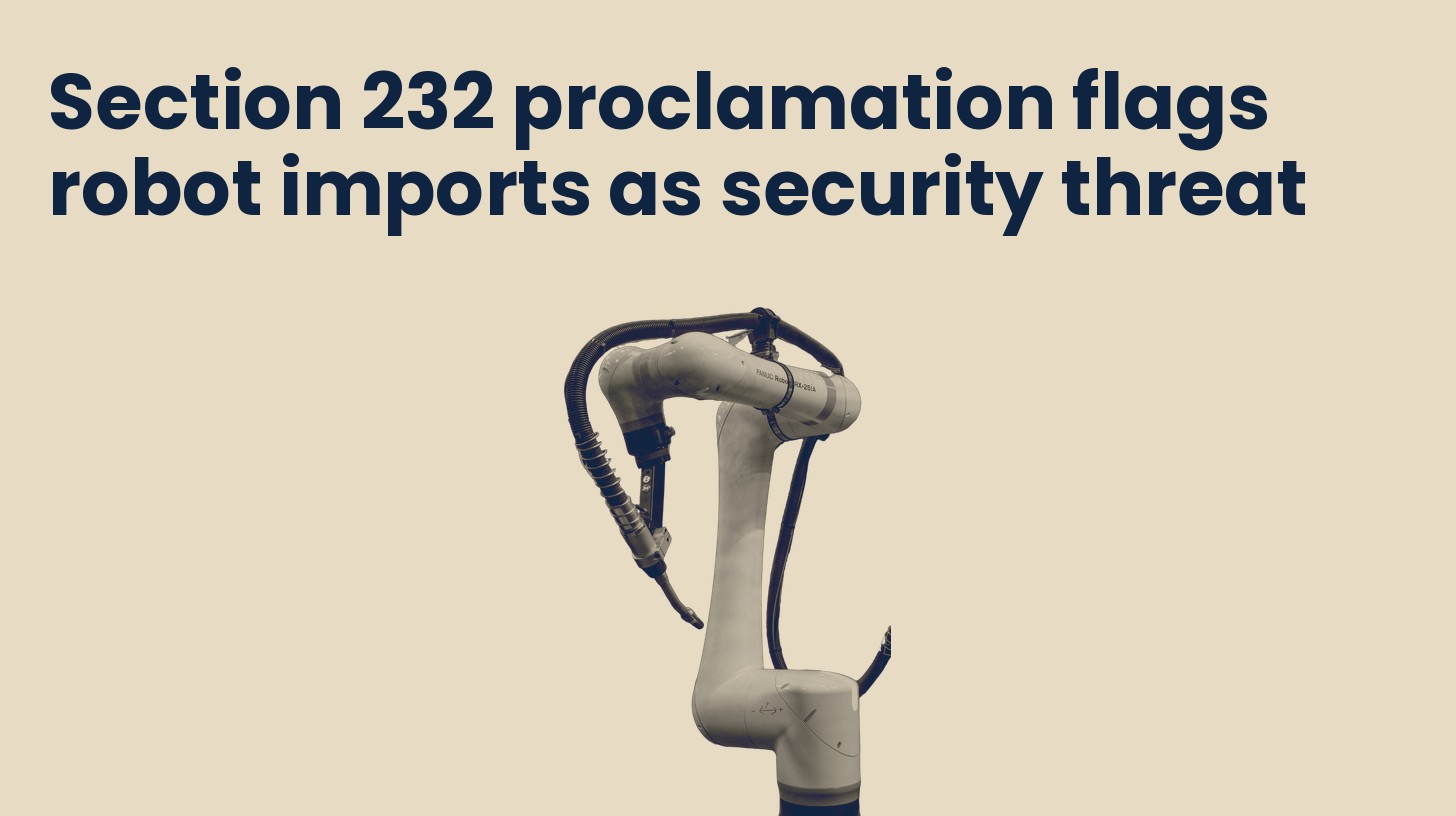
President Trump issued a proclamation on Oct. 28, 2026 declaring that imports of robotics, industrial machinery and their components threaten U.S. national security. The move is expected to redirect defense procurement toward domestic suppliers.
What's happening
- Trump's Oct. 28 proclamation states robotics, industrial machinery and components imports threaten to impair U.S. national security.
- The policy restricts foreign sourcing and redirects procurement toward domestic manufacturers and suppliers of these systems.
Why it matters
- Defense contractors currently relying on foreign robotics and component suppliers face supply chain disruption and must shift sourcing to domestic vendors.
- Domestic robotics and industrial machinery manufacturers gain procurement priority from the Pentagon, expanding addressable market and production volume.
- The restriction affects component suppliers across the defense industrial base, forcing vertical integration or partnership with domestic sources for critical automation systems.
Going deeper
- The proclamation frames autonomous systems and industrial robotics as national security-critical, elevating them to the same policy level as weapons and electronics.
- Implementation likely requires DOD guidance on acceptable domestic sources and qualification timelines for switching suppliers mid-contract.
The intrigue
- Unclear whether proclamation applies retroactively to existing contracts or only new procurements, creating potential disputes over compliance obligations.
Source: insidedefense.com · Oct 28, 2026 · Drafted with Claude, reviewed by Industrial Base Alpha.